|
|
Call for Papers - English |
Convocatoria de Ponencias - Español |
Chamada de Apresentações - Português |
Submissions will open in late October with a deadline of early December. Check back here for regular updates or join DSA today to be among the first to receive conference announcements.
Submission Guidelines
Submissions for all presentation formats must include a presentation title and abstract (maximum 300 words) that describes the objective or purpose of the presentation, research or creative approach, perspective or theoretical framework, methodology, and relevance to the conference theme. Submissions for pre-formed panels must include a panel abstract and individual paper abstracts (maximum 300 words each). All notifications and announcements regarding submissions will be made via email. Please make sure each presenter’s contact information is included with your submission form.
Interventions can be proposed in one of the following forms:
- Individual papers (indicate what theme the paper responds to and share 4-5 keywords to facilitate panel formation by the programming committee).
- Pre-formed panels of 3 or 4 presenters (these are encouraged and have a higher likelihood of acceptance).
- HUB submissions to participate in multi-day conversations around HUB conference-related themes
- Gatherings (this format replaces DSA's previous "roundtable" discussions).
- Practice-based activities such as movement workshops, site-specific dance interventions, performative presentations, and screendances.
- Dance Performances: 10 works of diverse movement and choreographic approaches to dance performance of a maximum of 10 minutes each will be selected for presentation in a fully produced show.
Participation in the conference is expected to be fully in-person. However, proposals for a limited number of individual papers and pre-formed panels that include a designated in-person moderator in charge of the virtual connection will be considered. HUB conveners will decide whether they accept virtual participants and commit to manage the virtual connection, in which case they will indicate that commitment in the submission form.
Submission Guidelines |
Directrices Generales para la Presentación de Propuestas |
Diretrizes Gerais para Envio de Propostas |
2027 HUBs
Hubs are meant to gather individuals around a stated theme, meeting two or three times over the course of the conference. More than any other presentation format, HUBs allow participants to gather repeatedly in close community throughout the conference - offering the potential for deep engagement. Below are the 6 HUBs chosen from those submitted by DSA’s working groups for the 2027 conference. Each HUB is
specifically programmed and curated, so please read the HUB description to better understand the theme and format of each one.
The HUB offerings for our 2027 conference are:
- Choreographing a Turbulent South Asia: Organized by the South Asian Dance Studies Exploratory Working Group, Facilitated by Arushi Singh and Preethi Ramaprasad
- The Indigenous HUB: Irreconcilable Spaces, Embodied Knowledge, and Gathering as Method: Organized by the Indigenous Performance and Research Alliance (IPRA) Exploratory Working Group, Facilitated by Sam Aros-Mitchell
- Mexican Folklórico as an Embodied Technology: Dancing Popular Traditions & Re-Envisioning Worlds: Organized by The Mexican Folklórico Dance across Borders Working Group, Facilitated by Manuel R. Cuellar and Xóchitl Chávez
- Murder on the Dancefloor: Violence and Nightlife: Organized by the Nightlife Studies Exploratory Working Group, Facilitated by Christine Șahin
- CURA/torial; Contemporary Latine/x Dance as Strategy for Exorcising the Myth of the Monolith: Organized by Latin American, Latinx/a/o/e, and Caribbean Dance Studies Working Group, Facilitated by Tess Angélica Losada-Tindall, Lourdes del Mar Santiago Lebrón, Kiri Avelar, Michelle Manzanales
-
Activating Asian and Asian Diaspora Dance Futures: Creating Resilience Through Community: Organized by Asian and Asian Diaspora Dance Studies Working Group, Facilitated by Emily Wilcox & more to be determined
Read the Full HUB Descriptions
Conference Co-Chairs
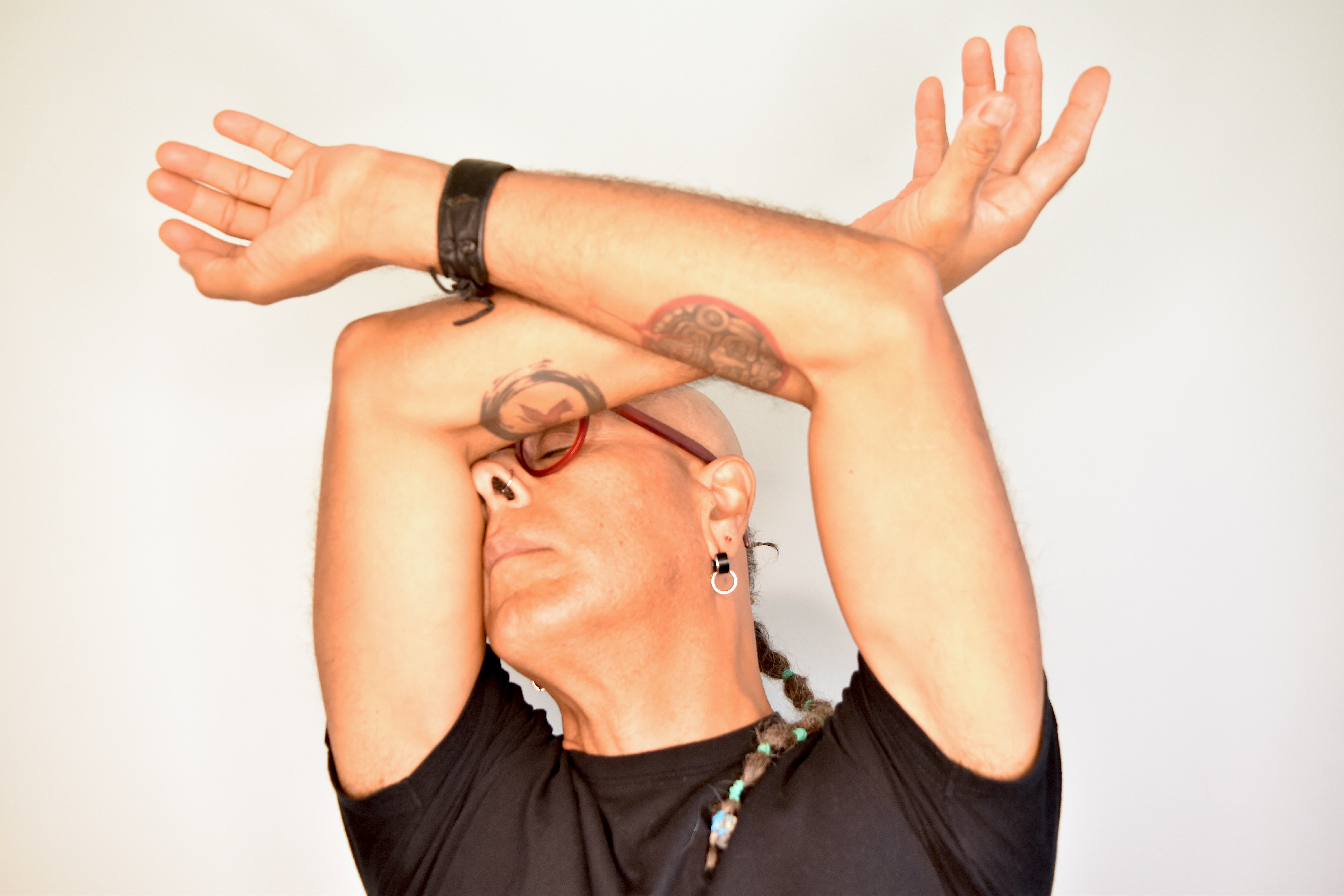 José Luis Reynoso Bello is Associate Professor of Critical Dance Studies at the University of California Riverside. He was the Mellon Postdoctoral Fellow in Dance Studies in/and the Humanities at Northwestern University (2012-2014). He completed his doctoral degree in Culture and Performance (specialization in Dance Studies) and Masters of Fine Arts in dance and choreography at the University of California Los Angeles. José Luis also earned a master’s degree in Psychology from California State University Los Angeles. His research interests include how narratives (mythologies) that dancers and dance scholars create about their practices also serve to form a sense of who they are, to distinguish themselves from others, and to position themselves and others within social, artistic, and academic hierarchies. He has published articles on dance and performance in Latin America, the United States, and Europe. His book, Dancing Mestizo Modernisms: Choreographing Postcolonial and Postrevolutionary Mexico won the Dance Studies Association’s Oscar G. Brockett Book Prize for Dance Research in 2024.
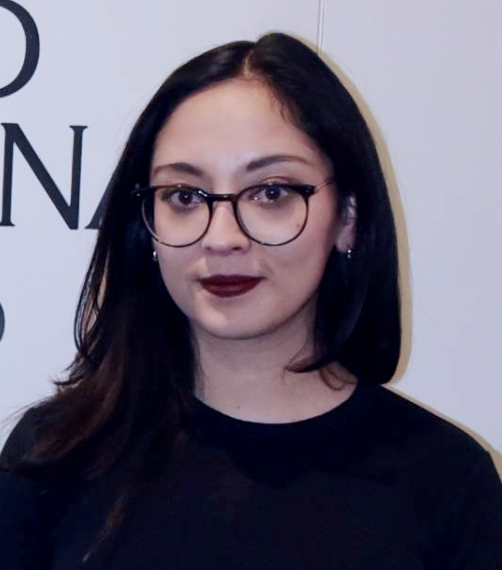
María Sicarú Vásquez Orozco, Ph.D. (Universidad Iberoamericana Ciudad de México) earned a Bachelor’s degree in Art History in 2013, a Master’s degree in Art Studies in 2018, and a Ph.D. in the History and Critical Theory of Art in 2022, all from the Universidad Iberoamericana. She has worked as a registrar at the National Museum of Art and as a cultural manager. Her research focuses on dance representation, visual culture, imaginaries, and identities. She is a member of the Dance Studies Association and the Dancing with Decolonization Conference board. She is also a member of the National Council of Dance and the Dance Research Network in Mexico. She coordinates the BA in Art History program and is an academic manager in the Art Department at Universidad Iberoamericana.
