





Speculative Choreographies:
Bodies, Economies, and Movement in a World in Flux
Register Now!
Now Accepting Guest Editor Proposals for Conversations Volume 46Conversations Across the Field of Dance Studies invites proposals for guest editors for Volume 46 of our annual publication. We welcome proposals from scholars at all career stages—including university faculty, independent researchers, artists, and educators working in dance and related disciplines across our international dance community. About ConversationsConversations Across the Field of Dance Studies is the annual open-access publication of the Dance Studies Association, dedicated to timely themes and debates shaping the field of dance studies. Each issue is guest edited and provides a space for scholars, artists, and educators to respond publicly to pressing questions and current developments in the field. Conversations publishes a wide range of formats, including think pieces, scholarly dialogues, practitioner reflections, photo and video essays, poetic reveries, reports from the field, ethnographic reflections, archival introductions, theoretical provocations, interviews, and more. We no longer publish conference proceedings or roundtables. Access the Full Call for ProposalsNow Available: Dance Research Journal Volume 57, Special Issue 2:
(excerpt from Editors' Note by Special Issue Editor Fangfei Miao) Access the IssueMembers may access the issue for free via the DSA Member Access section of our website.
ACLS DSA Academic Freedom FellowsThe Dance Studies Association’s Standing Committee on Membership and Professional Development (SCoMPD) is thrilled to announce an open call for submissions for DSA Academic Freedom Fellows, funded by the American Council of Learned Societies (ACLS), to promote a network of support and visibility for precarious scholars. Through direct distribution of $1,500 USD microgrants to 5 awarded fellows (in addition to 2027 conference registration waiver), this program aims to resource and platform dance/performance artists, scholars, artist-scholars, and researchers doing justice-oriented work* at the intersection of 1) economic/institutional precarity (e.g., contingent faculty, independent scholars, graduate students without access to other sources of funding) and 2) vulnerable scholarship (e.g., researchers whose work faces content suppression, defunding, and outright censorship in current political regimes whether because of content or geopolitical context). The fellowship year includes regular virtual gatherings, wherein fellows co-faciliate peer-to-peer development of projects, and the opportunity to present at the 2027 DSA conference as a cohort of DSA Academic Freedom Fellows. Learn MoreEl Comité de Membresía y Desarrollo Profesional (SCoMPD) de la Dance Studies Association (DSA) se complace en anunciar una convocatoria abierta para las becas «DSA Academic Freedom Fellows» (Becas de Libertad Académica de la DSA), financiadas por la organización American Council of Learned Societies (ACLS), con el fin de fomentar una red de apoyo y visibilidad para académicos en situaciones de precariedad. Mediante la asignación directa de microsubvenciones de 1.500 USD a cinco beneficiarios (además de la exención de la cuota de inscripción para la conferencia de 2027), este programa busca brindar recursos y visibilidad a artistas de danza y performance, académicos, artistas-académicos e investigadores que realizan trabajos orientados a la justicia social* en la intersección de: 1) la precariedad económica o institucional (por ejemplo, profesorado con contratos temporales, investigadores independientes o estudiantes de posgrado sin acceso a otras fuentes de financiación) y 2) la investigación en situación de vulnerabilidad (por ejemplo, investigadores cuyo trabajo se enfrenta a la supresión de contenidos, recortes de financiación o censura directa bajo regímenes políticos actuales, ya sea debido al contenido de la investigación o al contexto geopolítico). El año de la beca incluye reuniones virtuales periódicas, en las que las personas becarias facilitan conjuntamente el desarrollo de proyectos, así como la oportunidad de realizar una presentación en la conferencia de la DSA de 2027 como grupo «Academic Freedom Fellows» de la DSA. Más información |
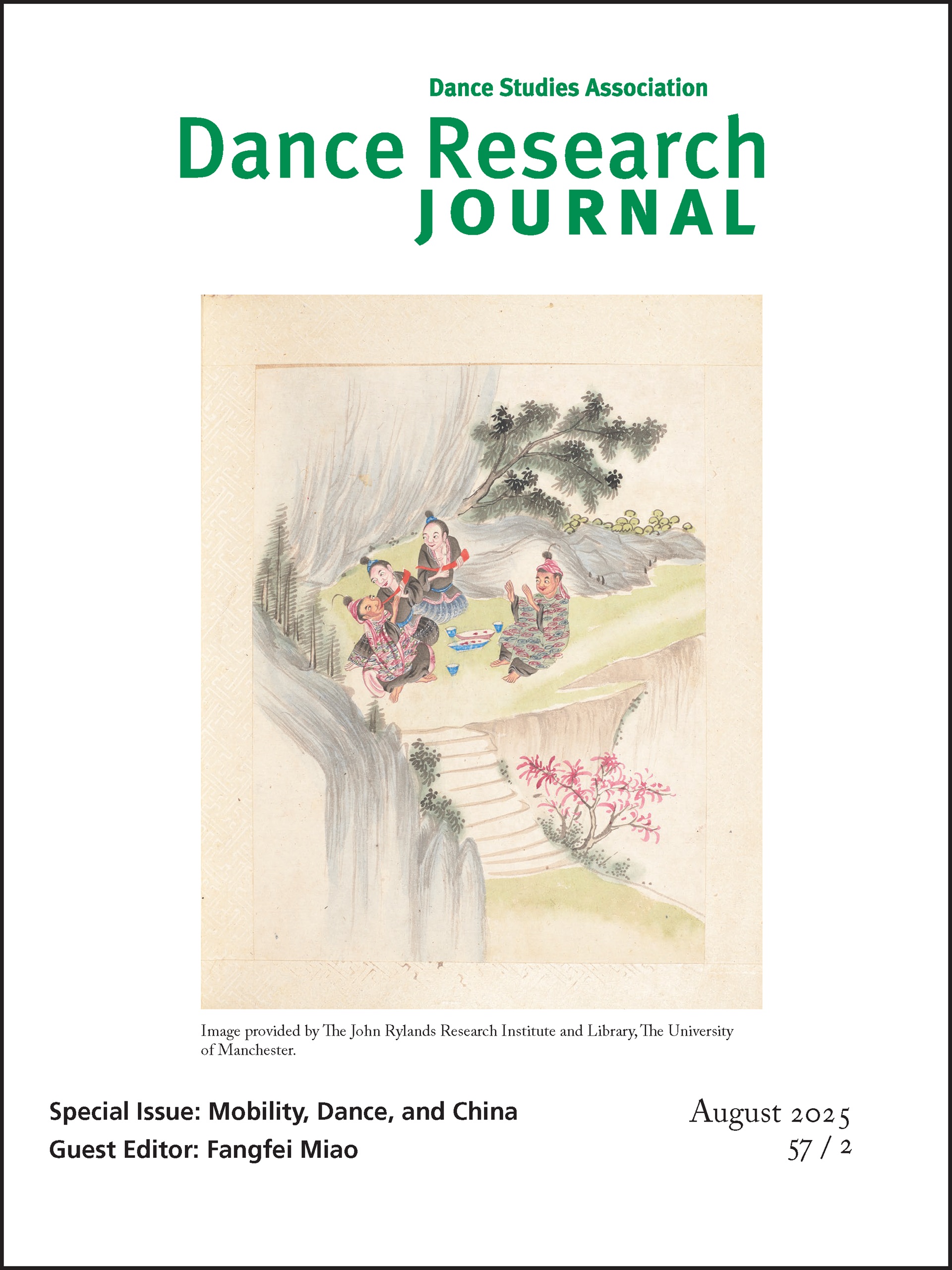 This special issue marks the first time that Chinese dance scholars have collectively written in English for readers in Anglophone academia. Instead of a translation of Chinese-language scholarship, this issue comprises English-language articles by Chinese scholars who know how to address the discrepancy in writing styles, theoretical assumptions, and ideological discourses across Anglophone and Chinese dance academia, a discrepancy that cannot be solved by language translation. Such a scholarly collectivity suggests an anti-white-supremacist move, in which Chinese-identified scholars seek visibility in Anglophone academia against the neutralization of both Western-centric notions of dance in China and the representation of these notions. Following Sansan Kwan and Yutian Wong in their co-edited issue, Dancing in the Aftermath of Anti-Asian Violence, the contributors and I highlight the significance of listening to the Asian scholars, who themselves are a vulnerable group of people often subject to racial violence in the West.